Osmosis: the signs to look for on your hull
Osmosis affects fibreglass (GRP) hulls. It shows up at haul-out, under the antifouling. Here is what to look for, and what happens next.
The YK Marine team4 min read
In brief
- Blisters below the waterline are the first sign to check.
- The diagnosis is done ashore: moisture measured, blisters opened.
- The treatment: gelcoat removed, hull dried, epoxy barrier coat.
What osmosis is
Osmosis affects polyester hulls, built from glass fibre and resin (GRP). Steel, aluminium and wooden hulls are not affected.
Gelcoat is not fully waterproof. Over the years, water passes through it, very slowly. In the laminate, it dissolves some of the resin's components. This forms an acidic liquid that draws in even more water. The pressure builds and lifts the gelcoat: that is the blister.
It is a slow process. Warm water, and a boat that stays afloat all year, speed it up.
The signs to look for
At haul-out, look closely at the underwater hull, below the waterline.
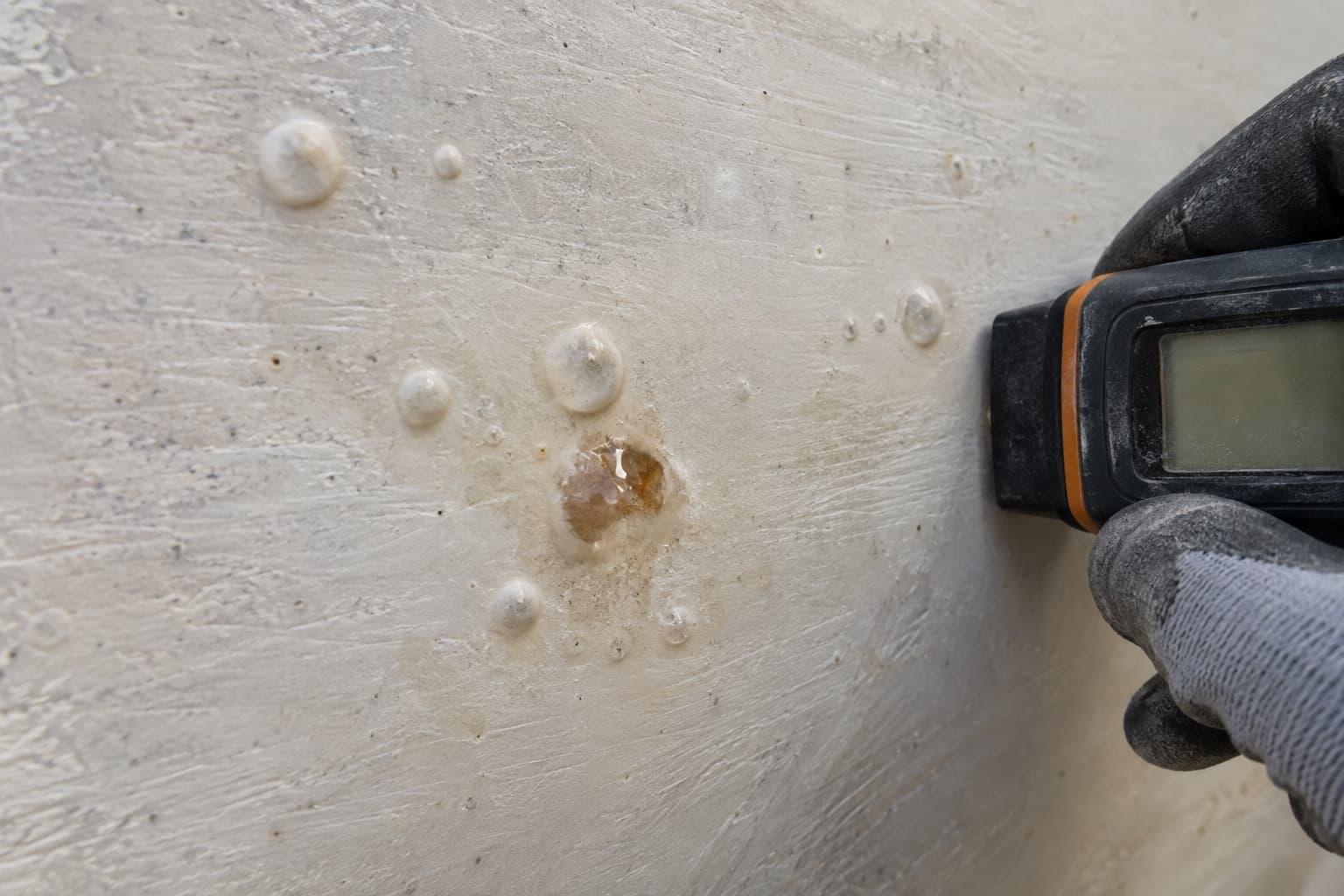
- Blisters under the antifouling or in the gelcoat, from pinhead size to the size of a coin.
- A liquid that runs out when you pierce a blister. If it is sticky and smells of vinegar, osmosis is very likely.
- Blisters that come back in the same places from one haul-out to the next.
- Moisture readings clearly higher below the waterline than above it.
Osmosis blister or paint blister?
Not every blister is osmosis. A blister can form between two coats of antifouling without reaching the gelcoat.
| Paint blister | Osmosis blister | |
|---|---|---|
| Where | Between two coats of paint | In the gelcoat or just below it |
| When pierced | Dry, or a little seawater | Sticky liquid, vinegar smell |
| Underneath | Sound paint or gelcoat | Damaged laminate |
| What to do | Sand and repaint | Full hull diagnosis |
How we check it at the yard
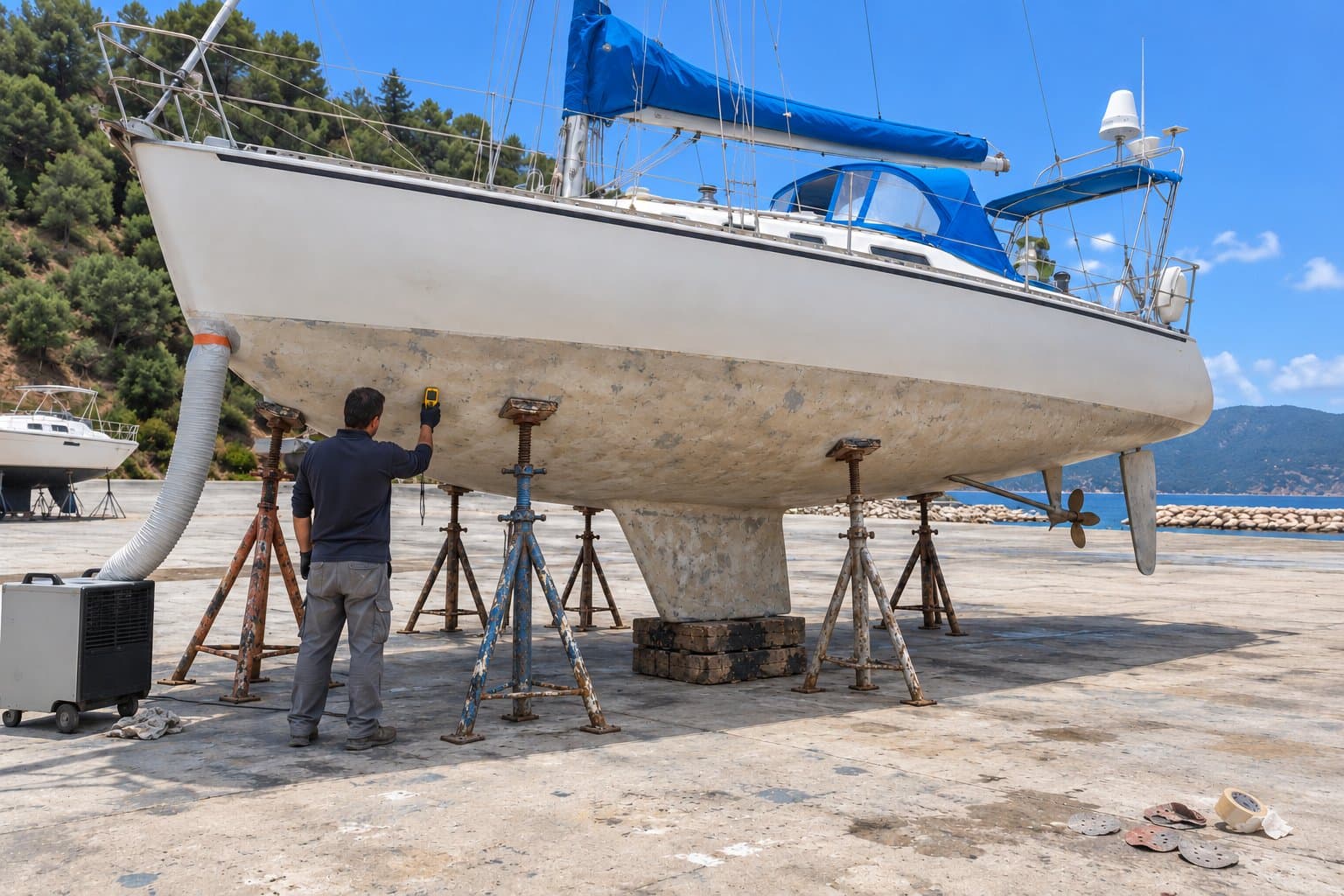
The diagnosis is done with the boat ashore, on a clean hull.
1. Haul-out
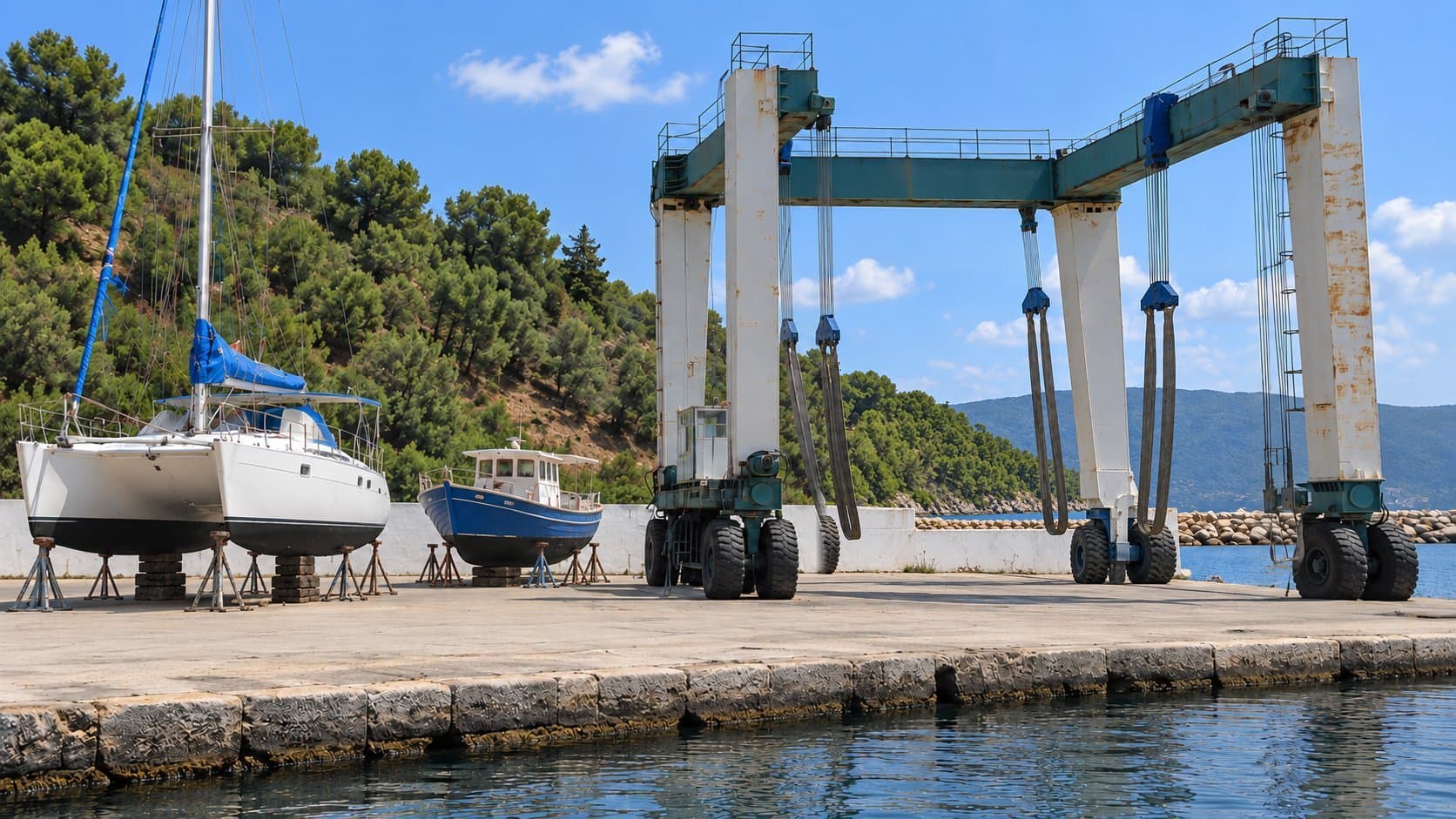
The travel hoist lifts the boat out, then it is set on stands.
2. Washing
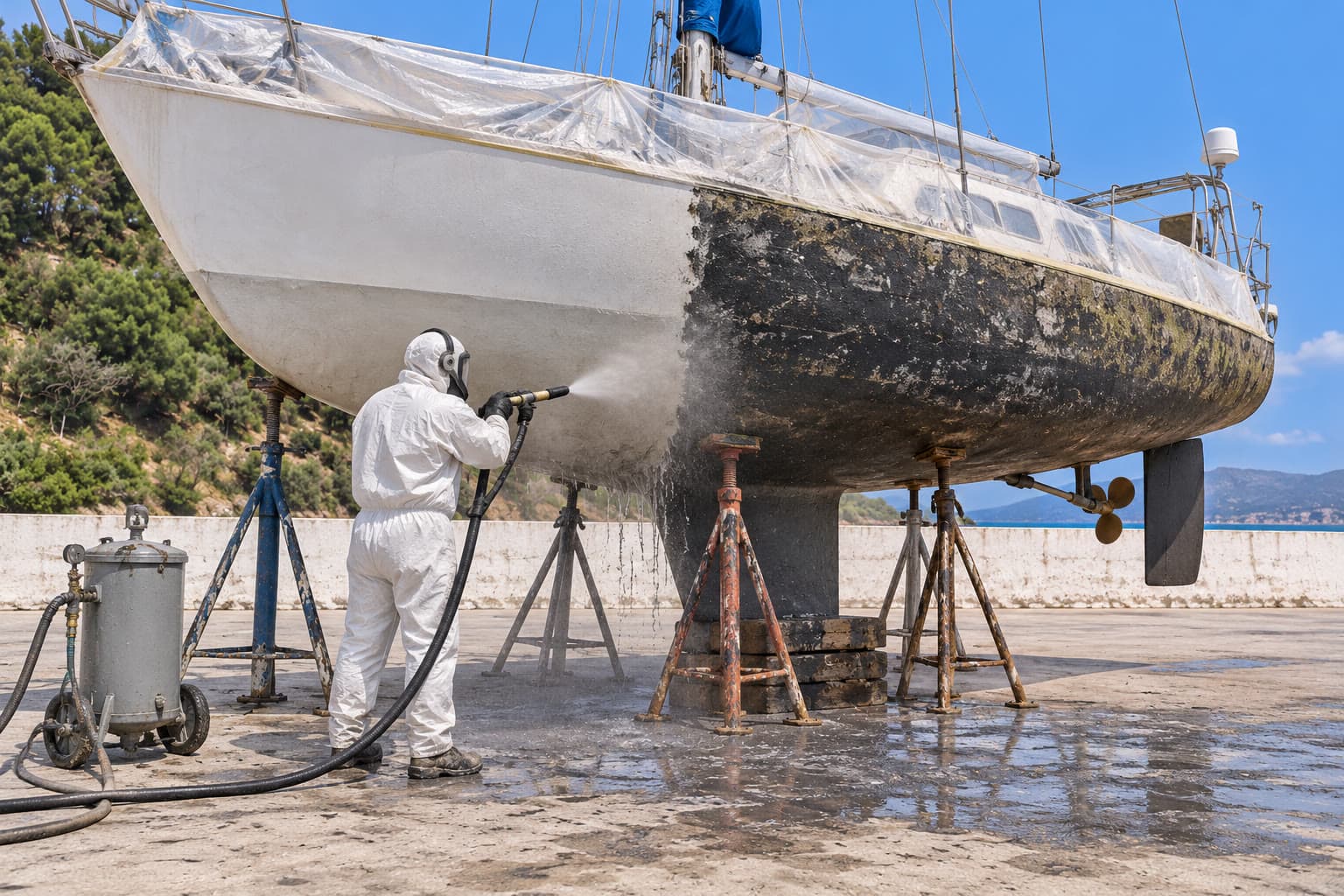
The underwater hull is pressure washed.
3. Surface drying
The hull is left to dry before any reading.
4. Moisture readings
Readings all over the underwater hull, compared with the topsides.
5. Opening blisters
A few blisters are opened to see the laminate.
A reading taken just after haul-out means little: the surface is still wet. Under thick antifouling, the gelcoat is hard to see. The hull can be stripped by wet blasting without gouging the gelcoat.
The options, depending on the results
- A few isolated blisters, normal moisture: they are opened, dried and filled with epoxy. They are checked again at the next haul-out.
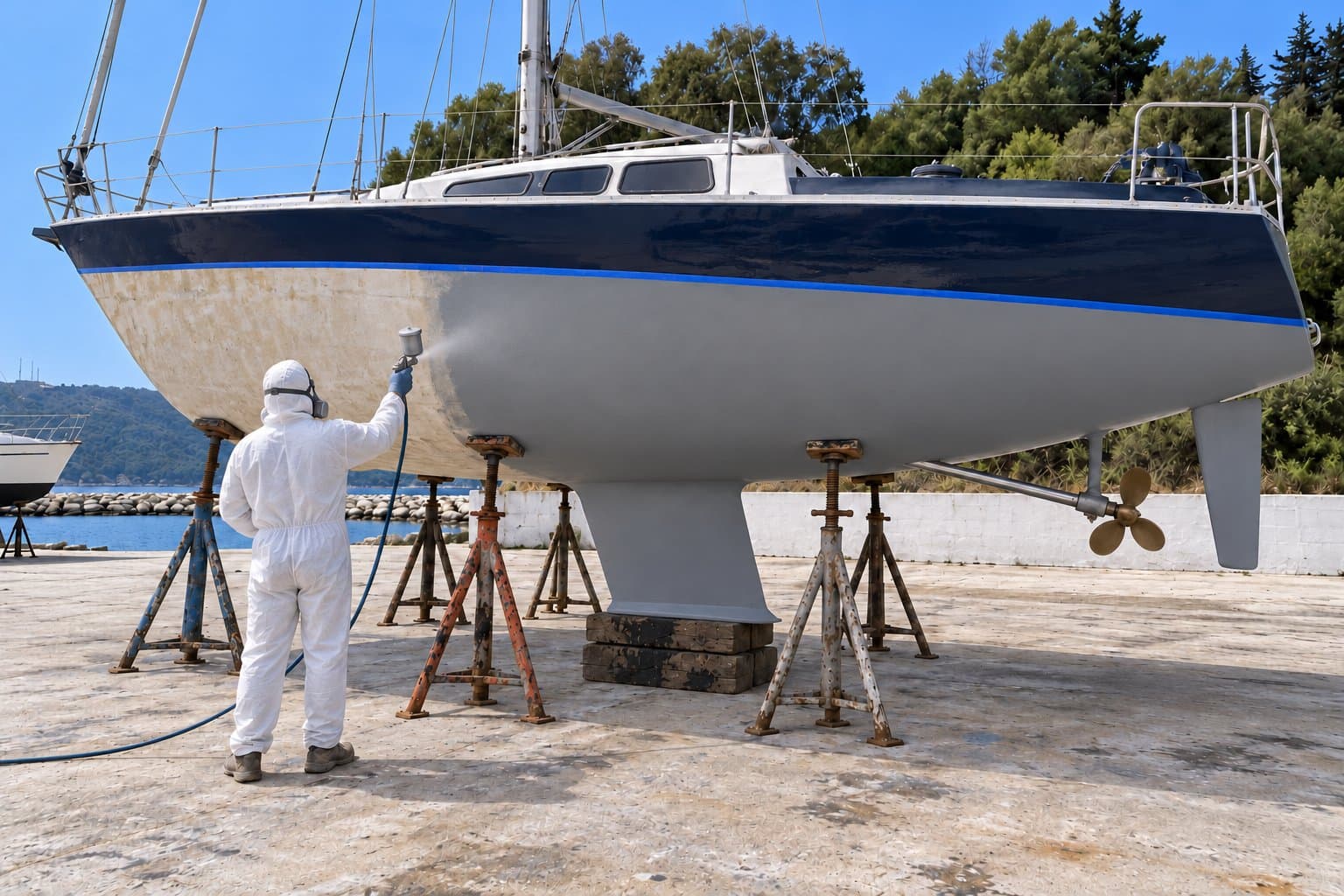
- Many blisters or high moisture: full treatment. The gelcoat is removed, and the hull is washed and dried. The laminate is repaired where needed, then the hull is sealed with an epoxy barrier coat and antifouling.
- A sound, dry hull: an epoxy barrier coat can protect it as a preventive measure, for example after stripping.
Drying takes from a few weeks to several months. It is tracked with a moisture meter, and the hull is only sealed once it is dry.
When to call a yard
- You see blisters below the waterline at haul-out.
- A pierced blister releases a liquid that smells of vinegar.
- You are buying a used boat: have it hauled out to see the hull before you sign.