Removing old antifouling: the four methods compared
When antifouling layers build up or start flaking, the hull has to go back to the gelcoat. There are four methods. They differ in time and in what they do to the hull.
The YK Marine team5 min read
In brief
- Old antifouling comes off when it flakes, when the layers are too thick, or before osmosis treatment.
- Scraping, chemical stripper, sanding and wet blasting all remove antifouling; only some spare the gelcoat.
- Antifouling residue contains biocides: protection and waste collection, whatever the method.
Every antifouling job adds a layer. After a few years they build up. When they start flaking, or before osmosis treatment, everything has to come off down to the gelcoat.
When should old antifouling come off?
- It is flaking: new antifouling sticks badly to a layer that is lifting.
- The layers are too thick: the bottom gets rough and the boat gets heavier.
- You change antifouling type: some products do not go over each other. See ablative or hard antifouling.
- Before osmosis treatment: the hull must be bare to dry and be checked. See the signs of osmosis.
The four methods
| Pros | Cons | |
|---|---|---|
| Hand scraping | Little equipment, precise on a small area | Very slow on a whole bottom, can scratch the gelcoat |
| Chemical stripper | Softens several layers at once | Must be gelcoat-safe, needs time to work, then scraping |
| Sanding | Common tools | Lots of dust, easy to gouge the gelcoat, slow in corners |
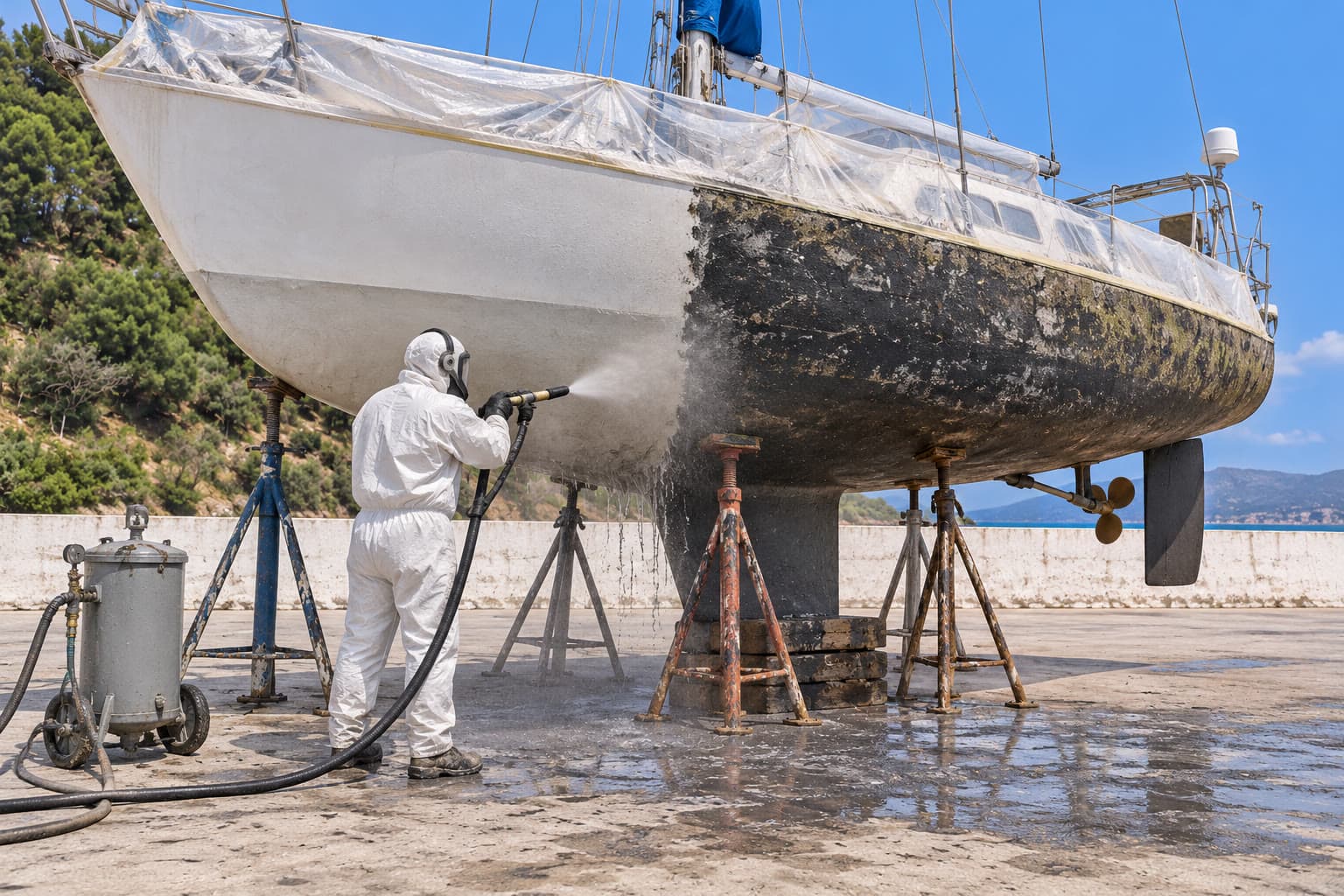
| Wet blasting | Water and fine abrasive at low pressure: gelcoat spared, little dust | Needs trained operators and the right equipment |
Dry sandblasting, used on steel, is too aggressive for a GRP hull: it attacks the gelcoat.
Protection and waste
Antifouling contains biocides. Whatever the method: suit, gloves, mask, and residue collected on the hard standing. With wet blasting, the water keeps the dust down.
And after?
A bare hull gets checked: moisture, blisters, laminate. Then a primer, then new antifouling, following the maker’s instructions.
In Tabarka
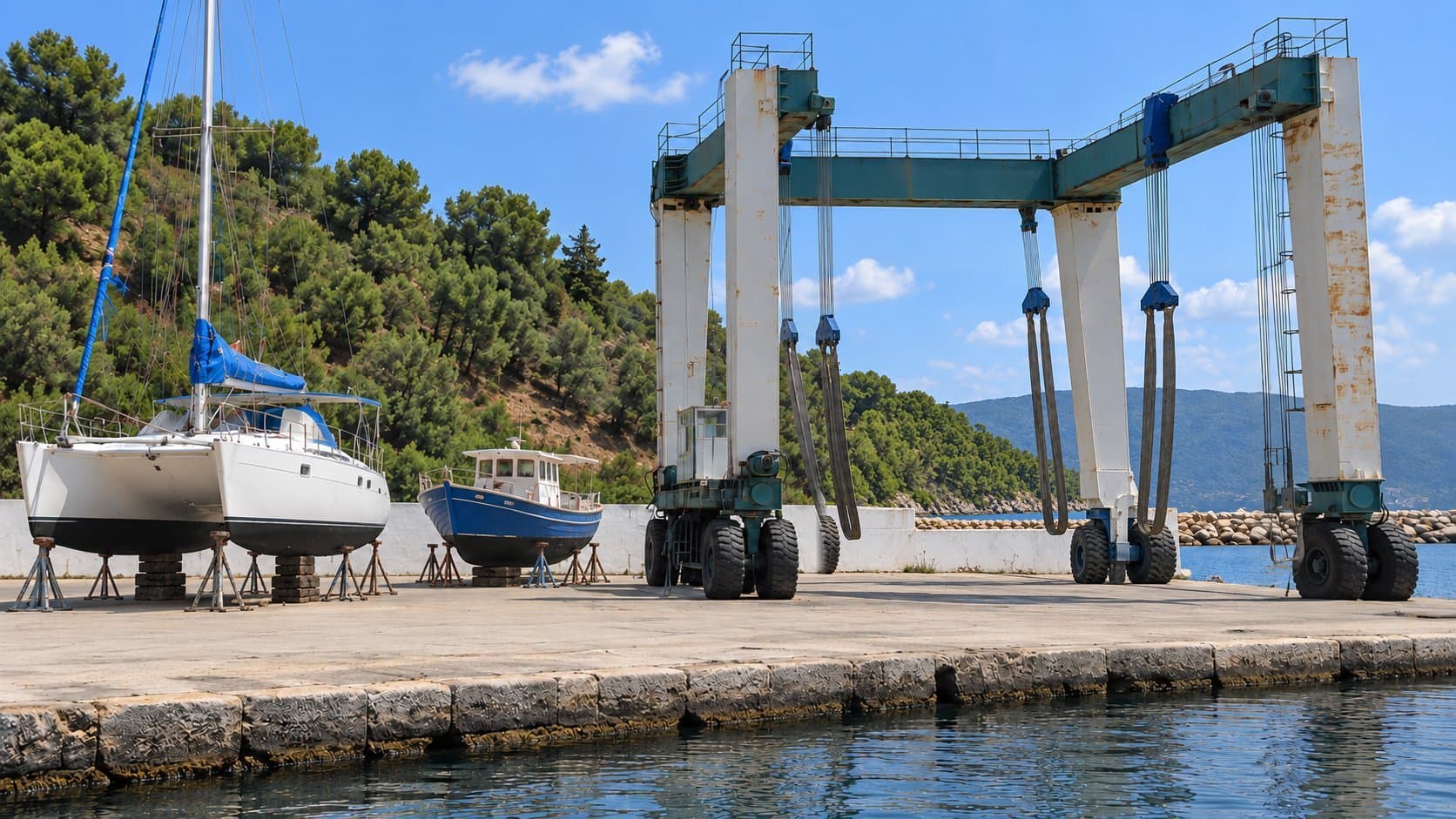
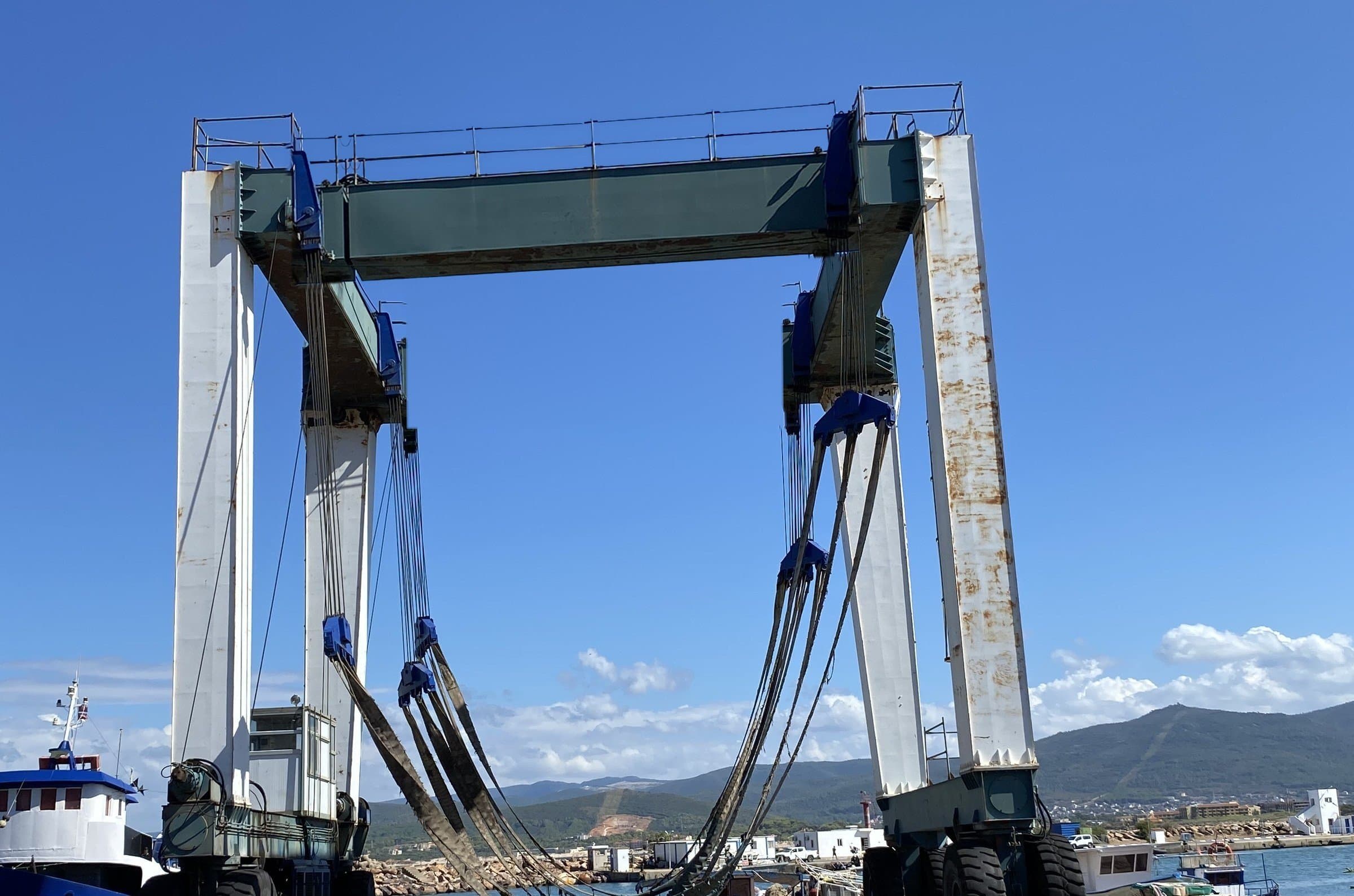
YK Marine is the only yard offering wet blasting in Tunisia. The boat is hauled out by the 160 t travel hoist, set on stands, and the antifouling comes off layer by layer down to the gelcoat. The detailed comparison: wet blasting or sanding.