Damaged propeller: repair or replace?
A knock, a rope, corrosion: the propeller takes a lot of punishment. Many can be repaired. Some have to be replaced.
The YK Marine team4 min read
In brief
- New vibration after a knock: check the propeller and the shaft.
- A bent or chipped blade can be straightened, then the propeller is balanced.
- A crack, a large missing piece or corroded metal: replace it.
Signs of a damaged propeller
- New vibration, especially at certain revs.
- The boat is slower, or the engine no longer reaches the same revs.
- A noise that was not there before.
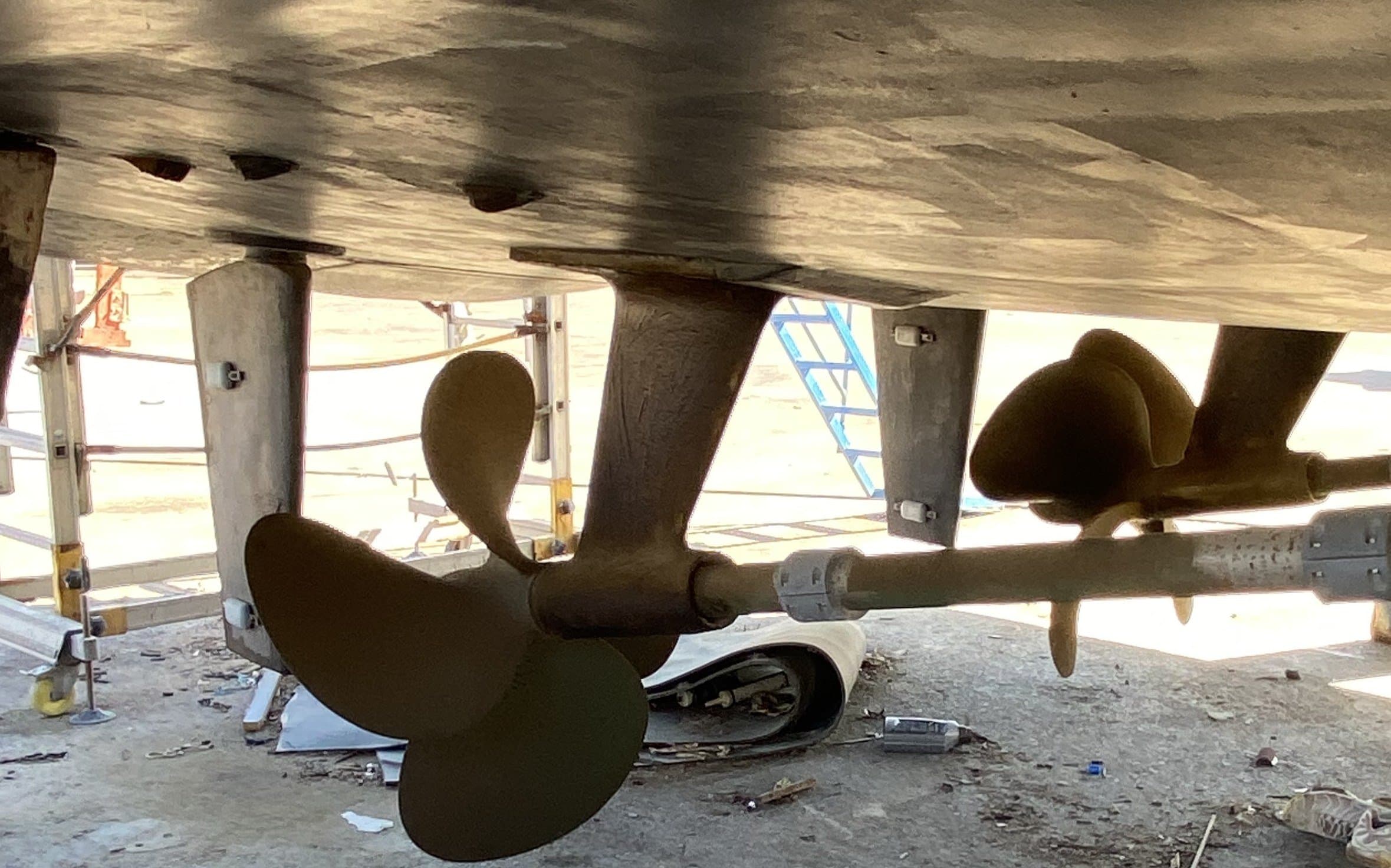
- Out of the water: a bent blade, a chipped edge, a missing piece of blade.
- Small pits on the blades: often cavitation, or corrosion.
- On a bronze propeller, pink or coppery patches: the metal is losing its zinc. The anodes are no longer protecting it.
Do not wait
An unbalanced propeller makes the whole shaft line vibrate. The cutless bearing, the stern gland, the engine mounts and the gearbox wear faster. A small repair done early saves bigger work later.
How we check it
The check is done with the boat ashore.
1. Haul-out
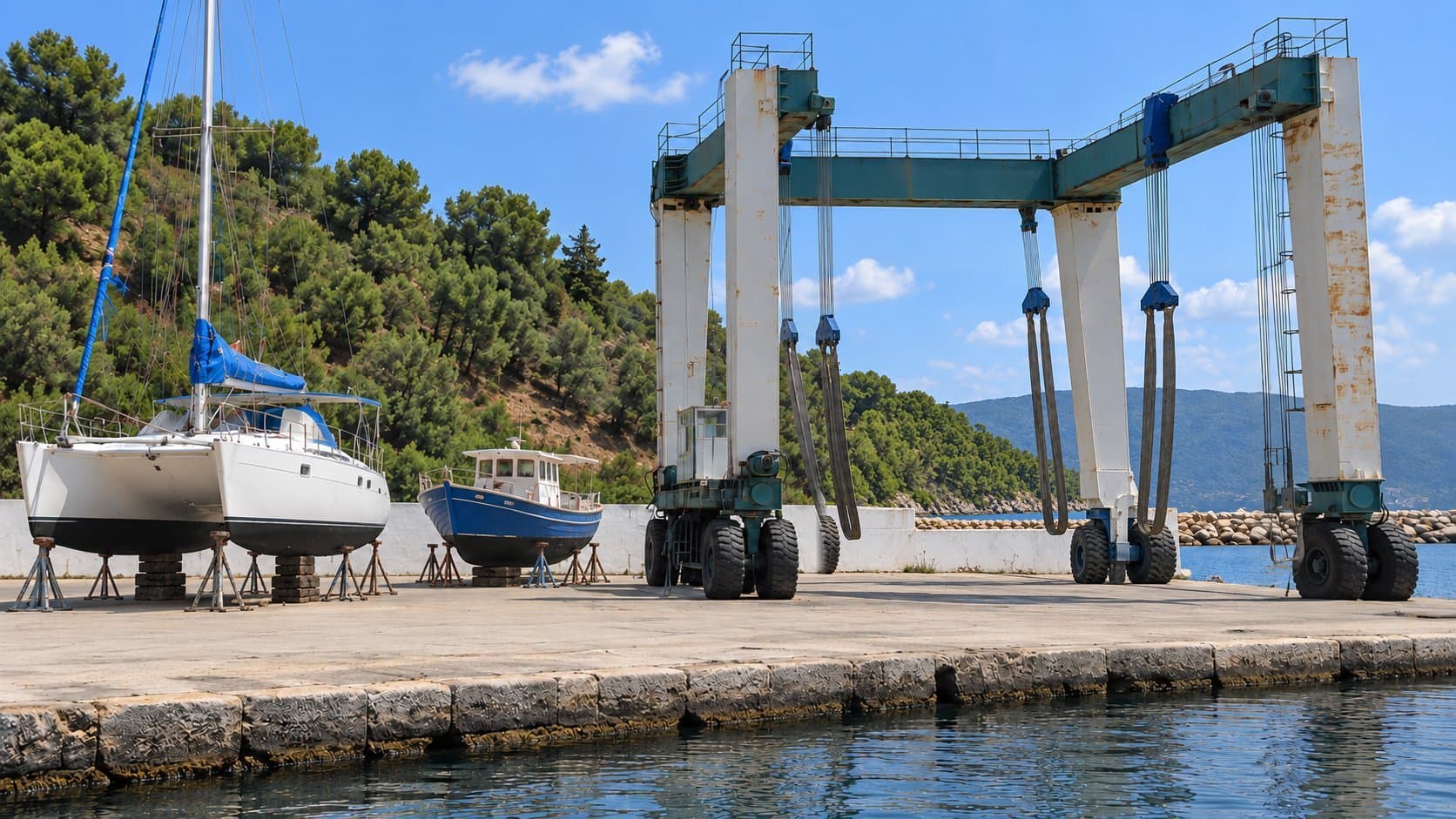
The travel hoist lifts the boat out, then it is set on stands.
2. Propeller
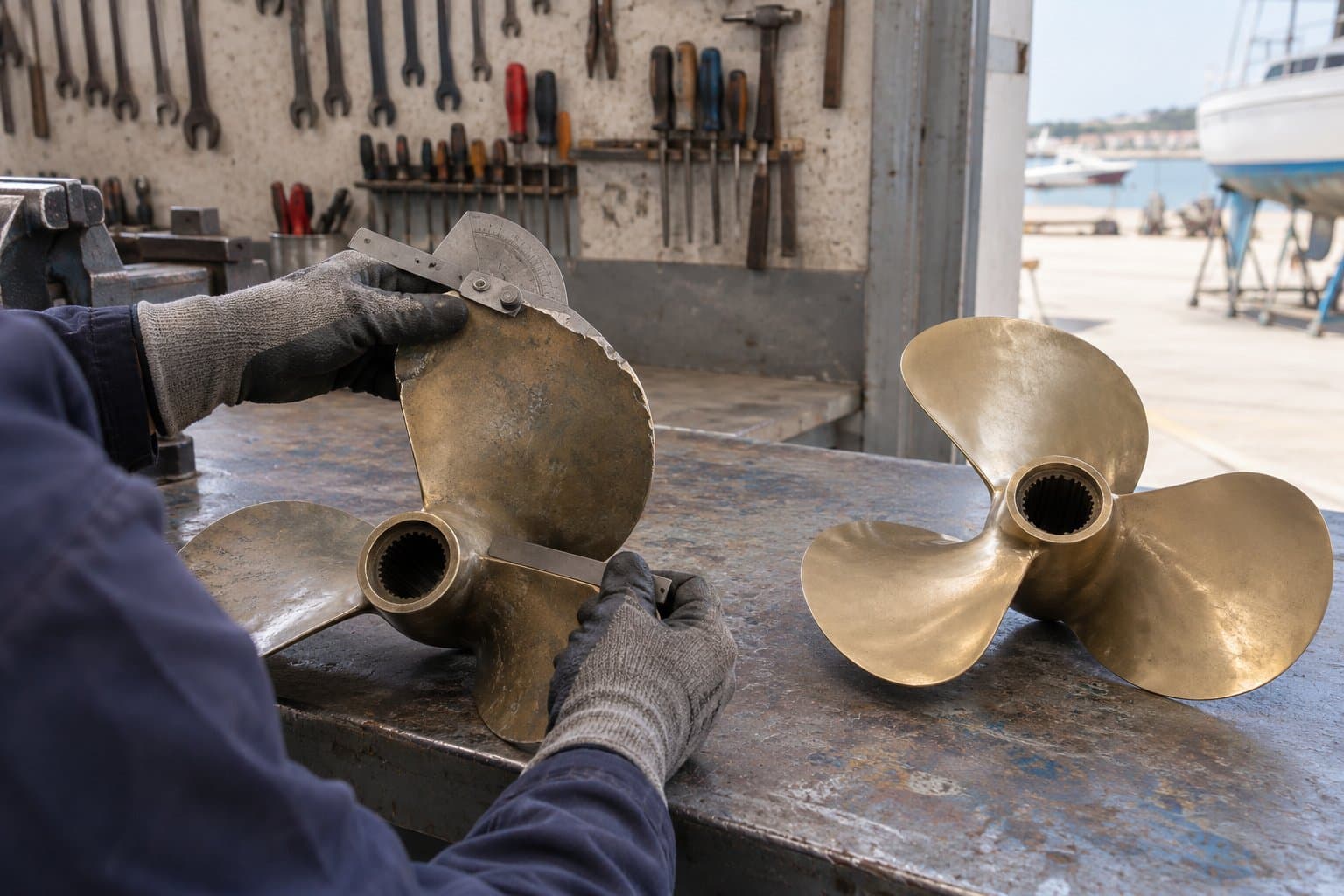
Each blade is checked: shape, edges, pitch, cracks.
3. Shaft
We check that the shaft is not bent.
4. Bearing and stern gland
The play of the shaft in its bearing is checked.
A knock can bend the shaft too. Replacing the propeller without checking the shaft will not cure the vibration.
When it can be repaired
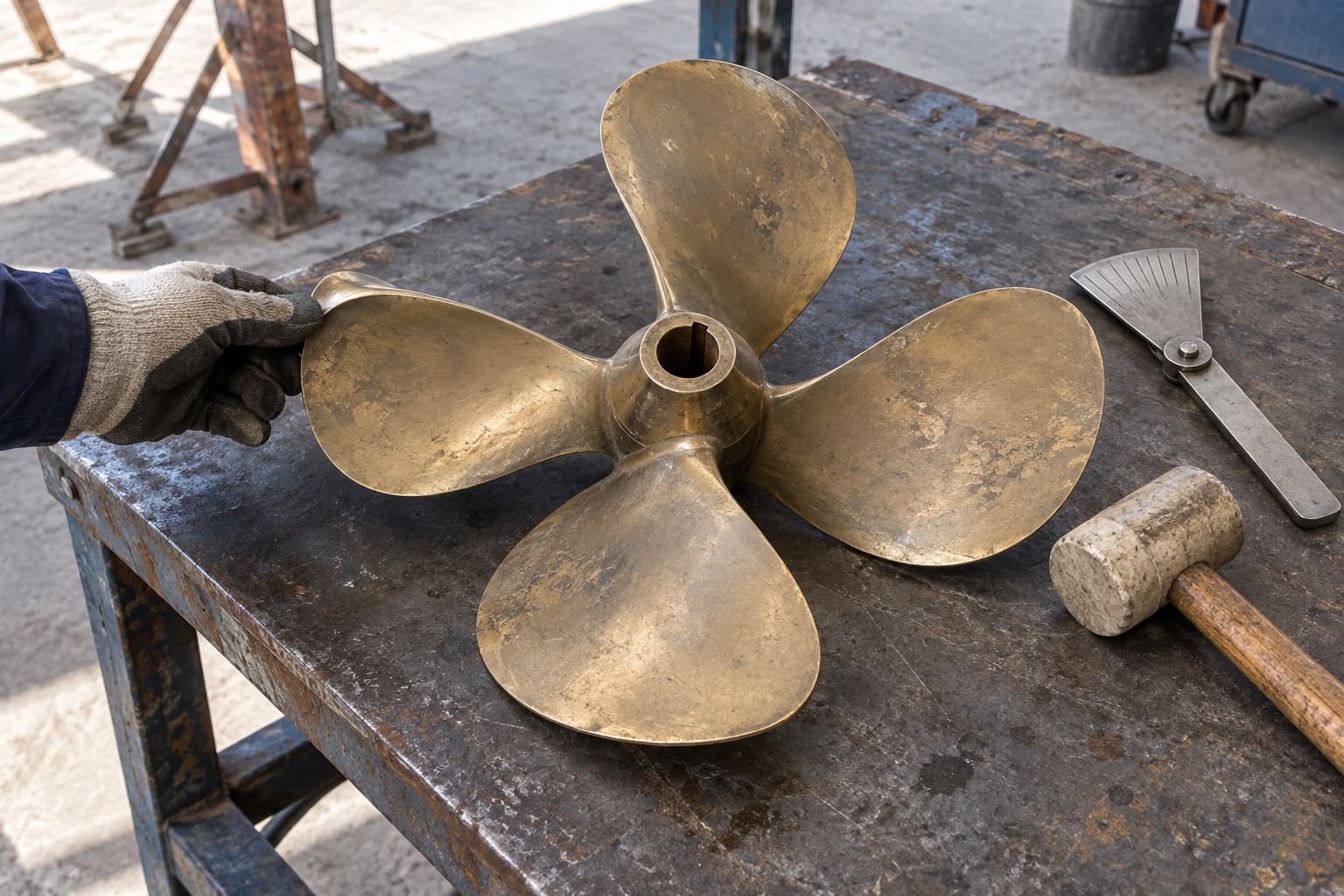
- One or more slightly bent blades: they can be straightened.
- Chipped edges or small dents: they can be dressed and reshaped.
- Depending on the metal, a small missing piece at a blade tip can sometimes be built up by welding.
After a repair, the propeller is balanced. It must turn without any imbalance, or the vibration comes back.
When it is better to replace it
- A crack, especially at the root of a blade or on the hub.
- A large piece of blade missing.
- A badly bent blade, or one already straightened several times: the metal becomes brittle.
- Metal eaten away by corrosion: pink, porous, crumbly.
- A damaged hub: worn taper, keyway that no longer holds.
- A repair that would cost almost as much as a new propeller.
Outboards and sailing yachts: two special cases
- Outboards: many propellers have a rubber hub that absorbs shocks. After a hard knock, it can spin: the engine revs up but the boat does not speed up. The hub can be replaced without changing the propeller.
- Sailing yachts: a folding or feathering propeller has hinges. They wear and develop play over time. The play and the way the blades open are checked at every haul-out.
Replacing it with the right propeller
A new propeller must match the old one: diameter, pitch, number of blades, direction of rotation and shaft taper. The diameter and pitch are often stamped on the hub. Write them down before ordering.
If the old propeller can be repaired, keep it on board as a spare.