Antifouling
Wet blasting or sanding: how to strip a hull without damaging the gelcoat
Antifouling layers build up with every haul-out. One day, the hull has to go back to the gelcoat. There are two ways to do it.
The YK Marine team5 min read
In brief
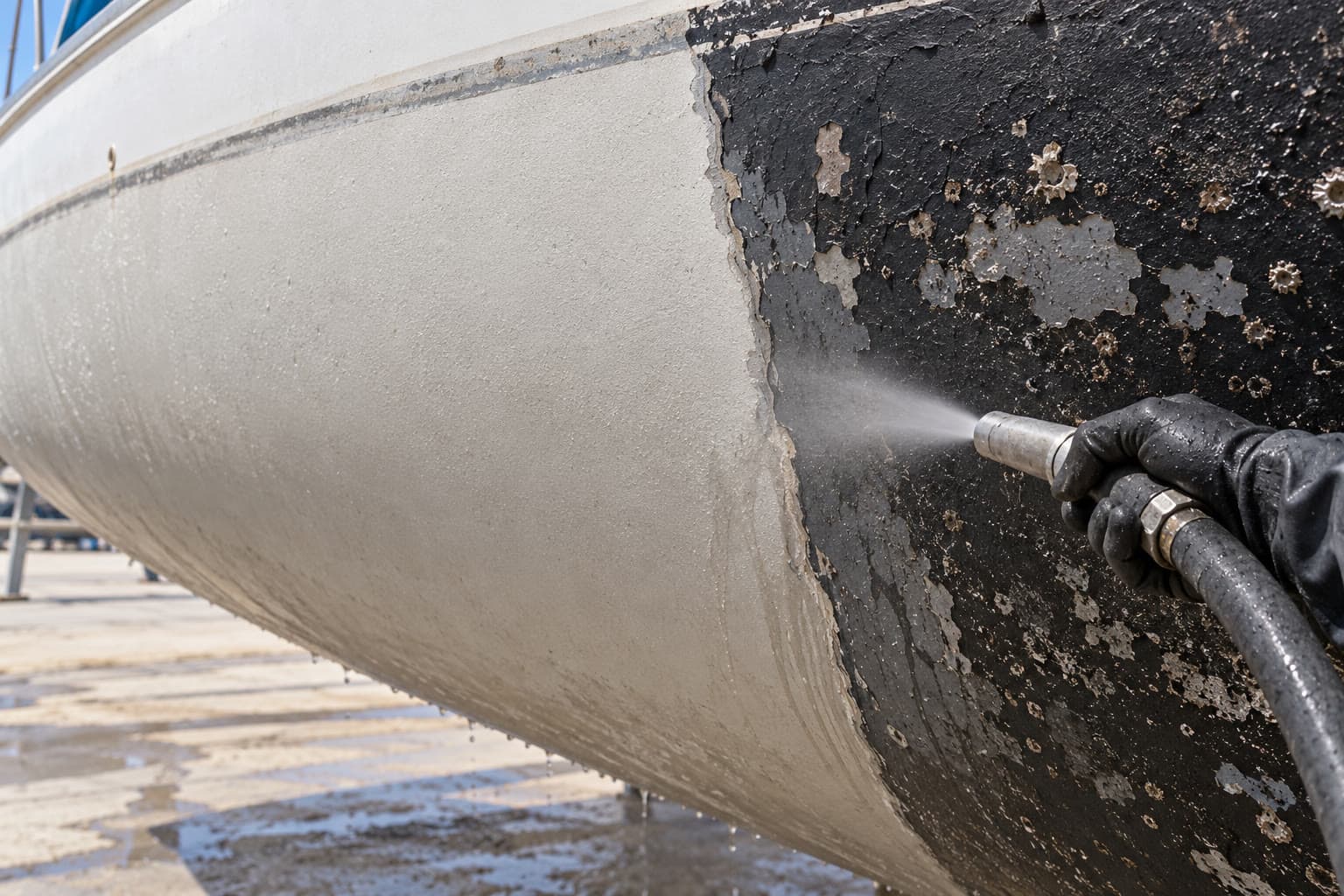
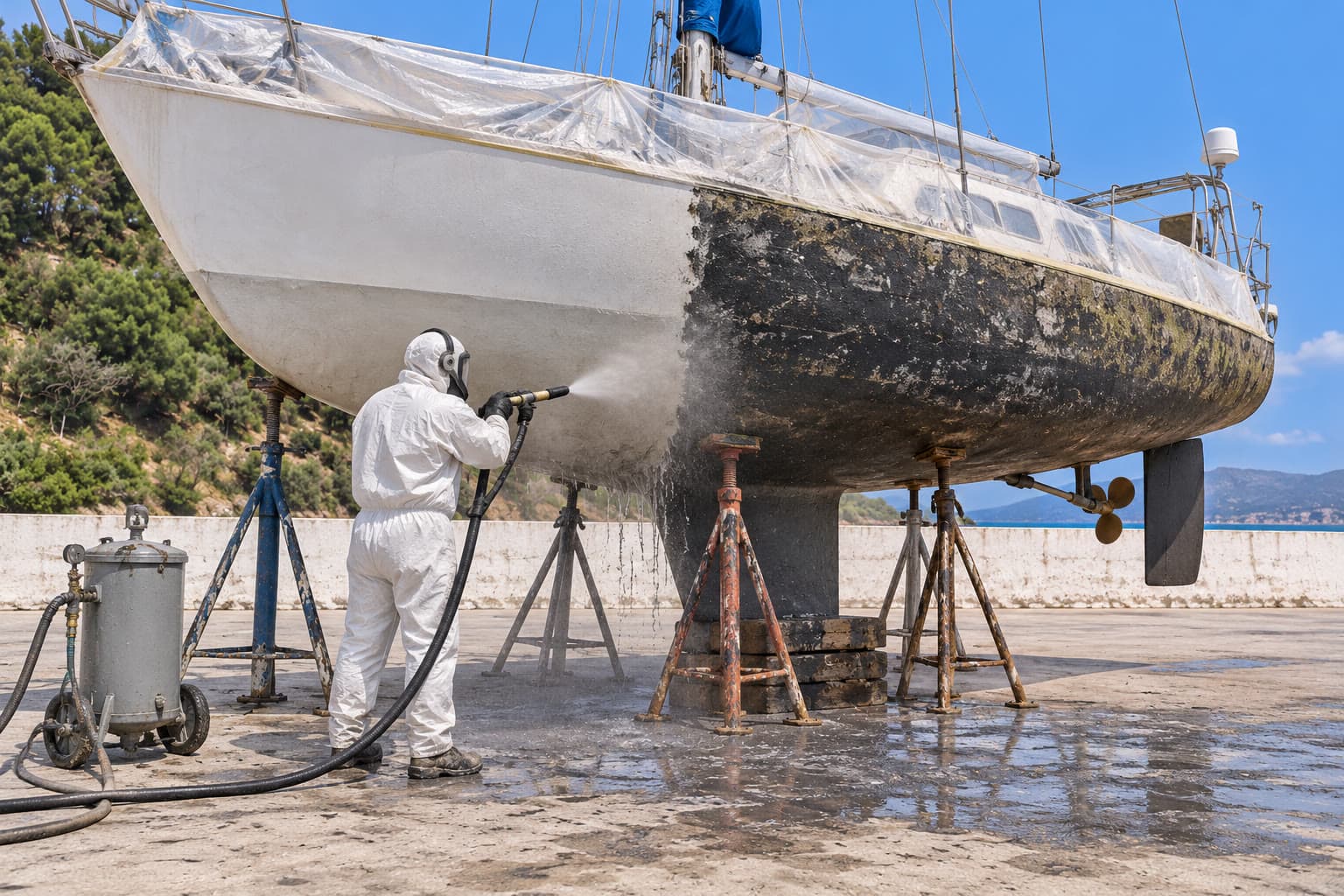
- Low-pressure wet blasting (hydrogommage) strips the hull with water and a fine abrasive.
- The gelcoat is neither gouged nor heated, and there is little dust.
- YK Marine is the only yard in Tunisia that offers it.
Why go back to the gelcoat
Too many layers end up flaking. New antifouling does not key well and the hull gets heavier.
Sanding or wet blasting: what changes
Both methods remove antifouling. They do not treat the gelcoat the same way.
| Sanding | Wet blasting | |
|---|---|---|
| Method | Disc sander, dry | Water and fine abrasive, low pressure |
| Gelcoat | Can be gouged | Preserved |
| Dust | A lot, needs extracting | Little: the water holds the residue |
| Keel and corners | Slow to reach | Easy to reach |
| Speed | Slower | Faster |
Wet blasting at the yard, in 4 steps
The boat stays set on stands for the whole job.
1. Haul-out
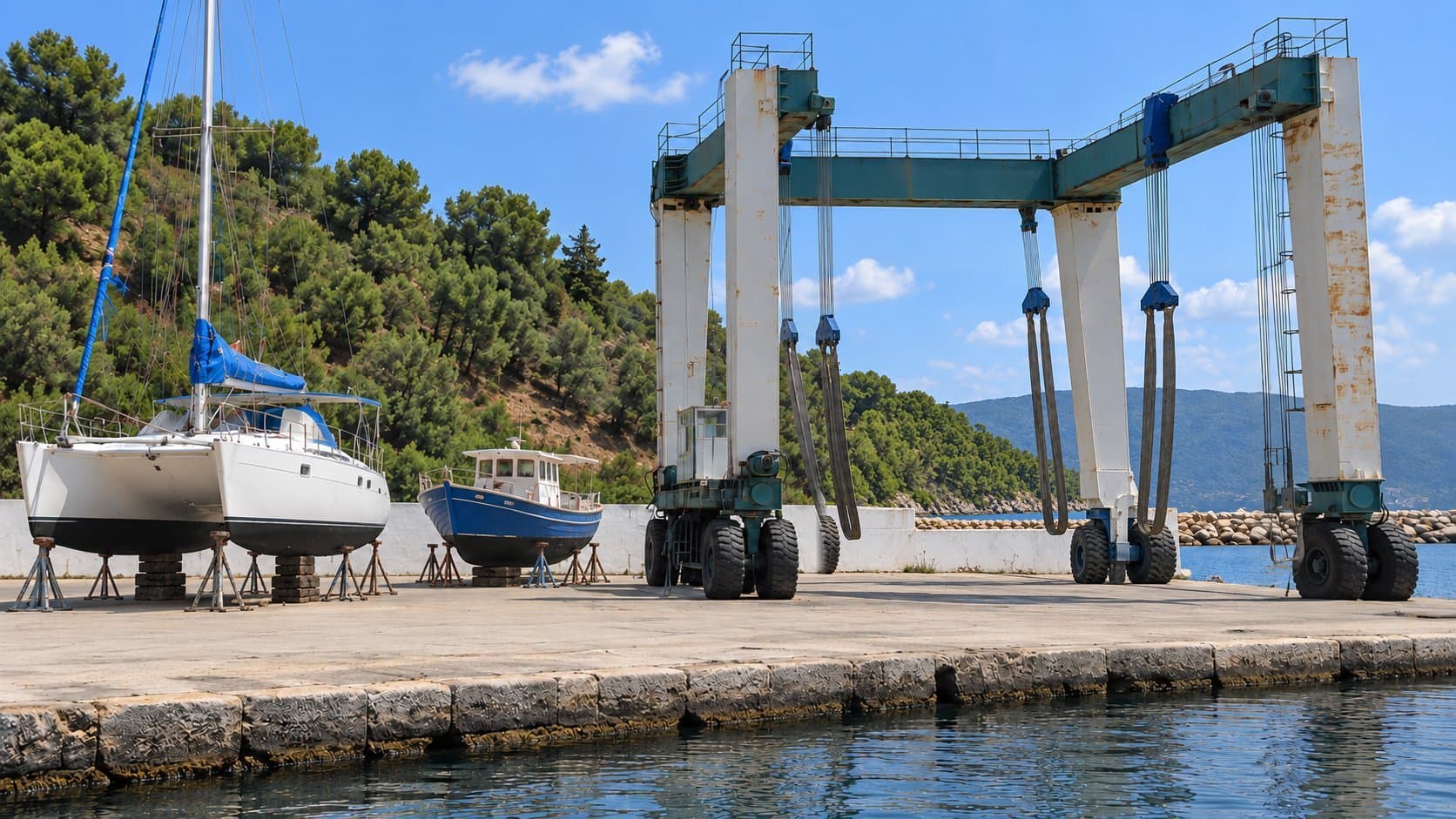
The travel hoist lifts the boat out, then it is set on stands.
2. Masking
Propeller, anodes and through-hulls masked.
3. Wet blasting
Layer by layer, down to the gelcoat.
4. Rinse and check
Hull rinsed, dried, inspected.
And after stripping?
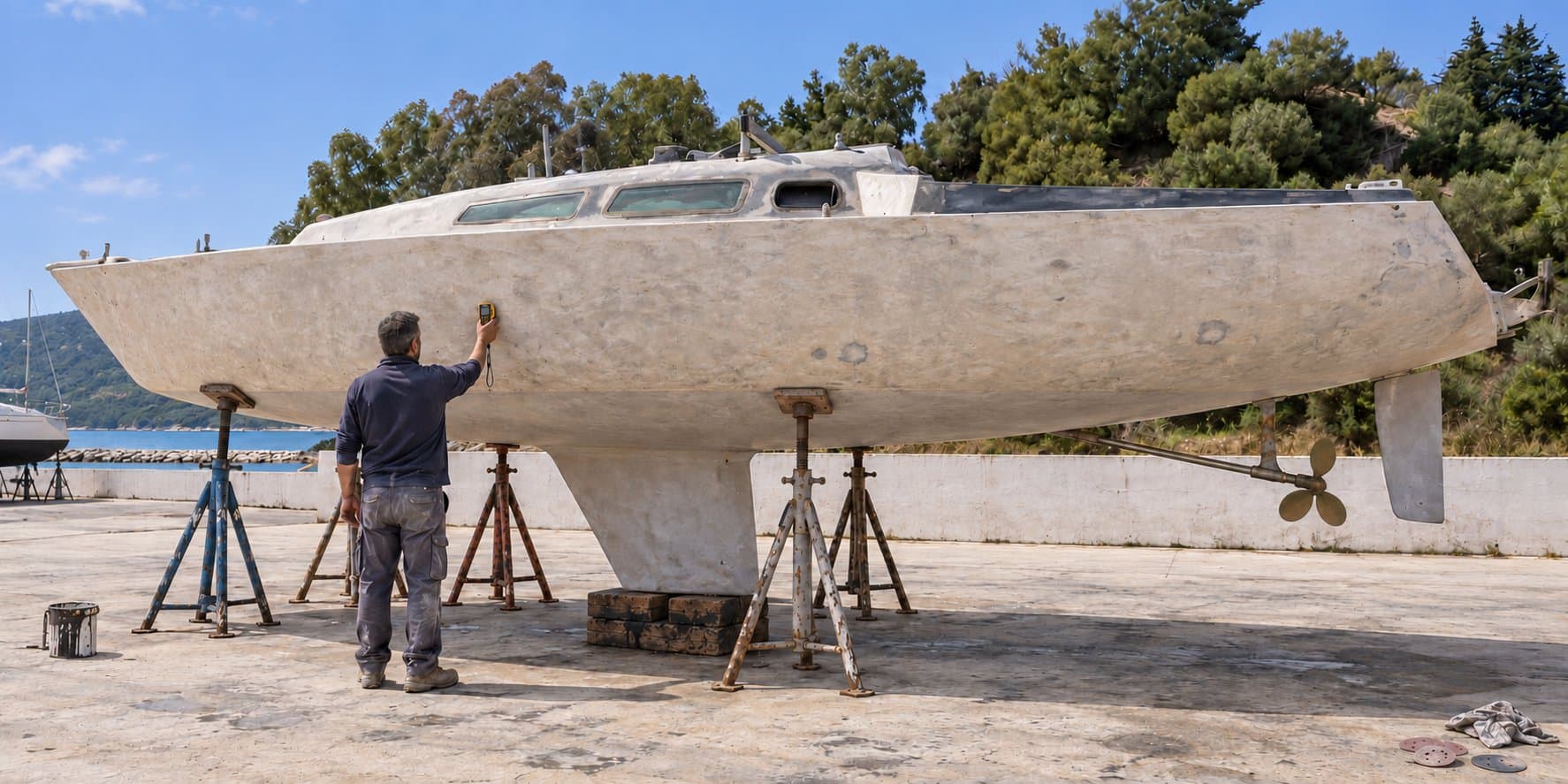
A bare hull can be checked: moisture, blisters, laminate. It is the right time to treat osmosis.
The serviceWet blasting (hydrogommage)The only yard in Tunisia offering it. Quick quote on WhatsApp.View page