When should you replace your boat's anodes?
Anodes wear away so that the propeller, the shaft and the other metal parts do not. A worn-out anode protects nothing.
The YK Marine team4 min read
In brief
- Replace an anode once it is half worn.
- Check them at every haul-out, at least once a year.
- At sea: zinc or aluminium. Magnesium is made for fresh water.
What an anode does
Under water, two different metals connected together form a battery. The less noble of the two dissolves: this is galvanic corrosion.
An anode is made of a metal less noble than the bronze, stainless steel or aluminium on the boat. It dissolves in their place. That is why it is called a sacrificial anode.
Where the anodes are
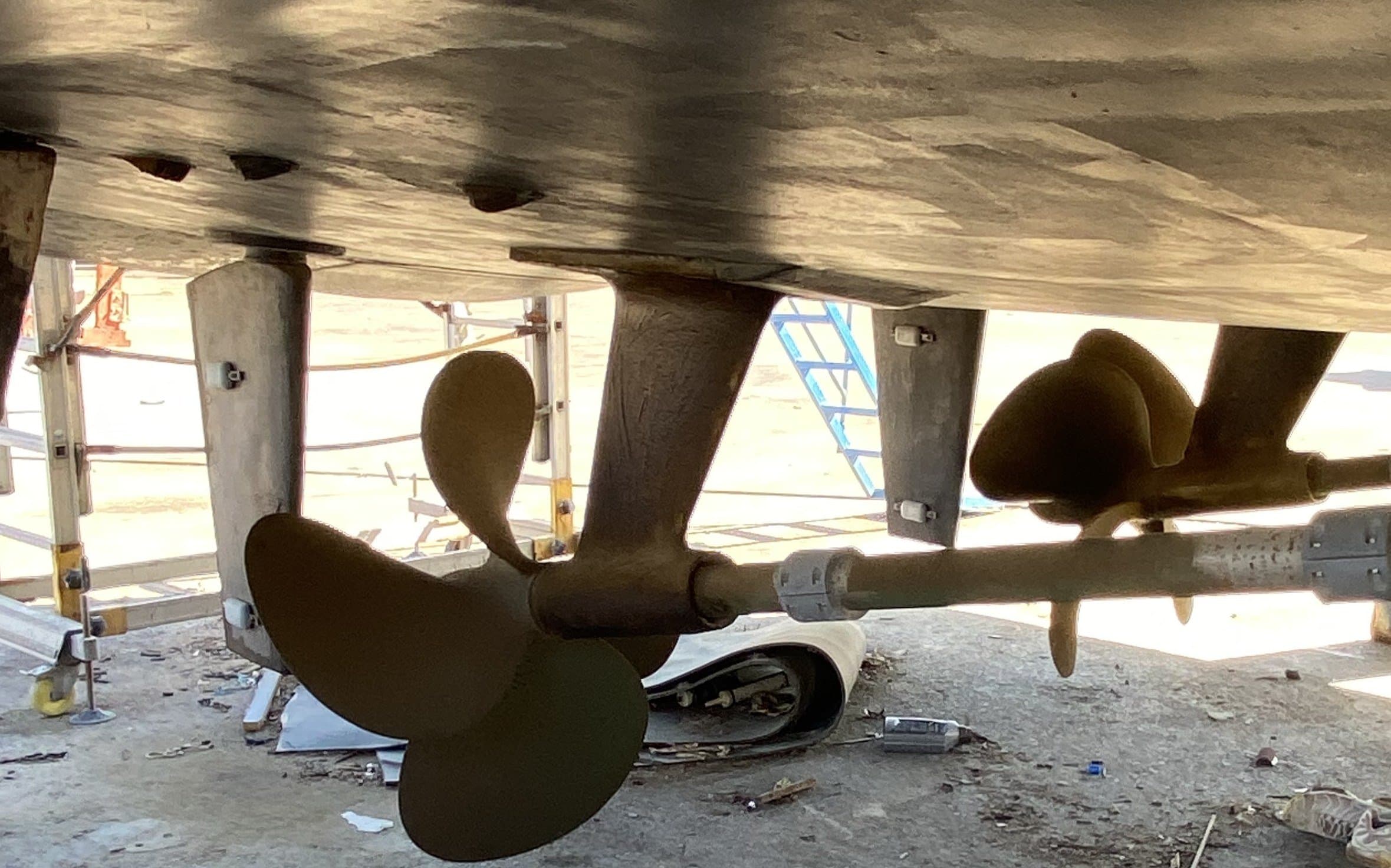
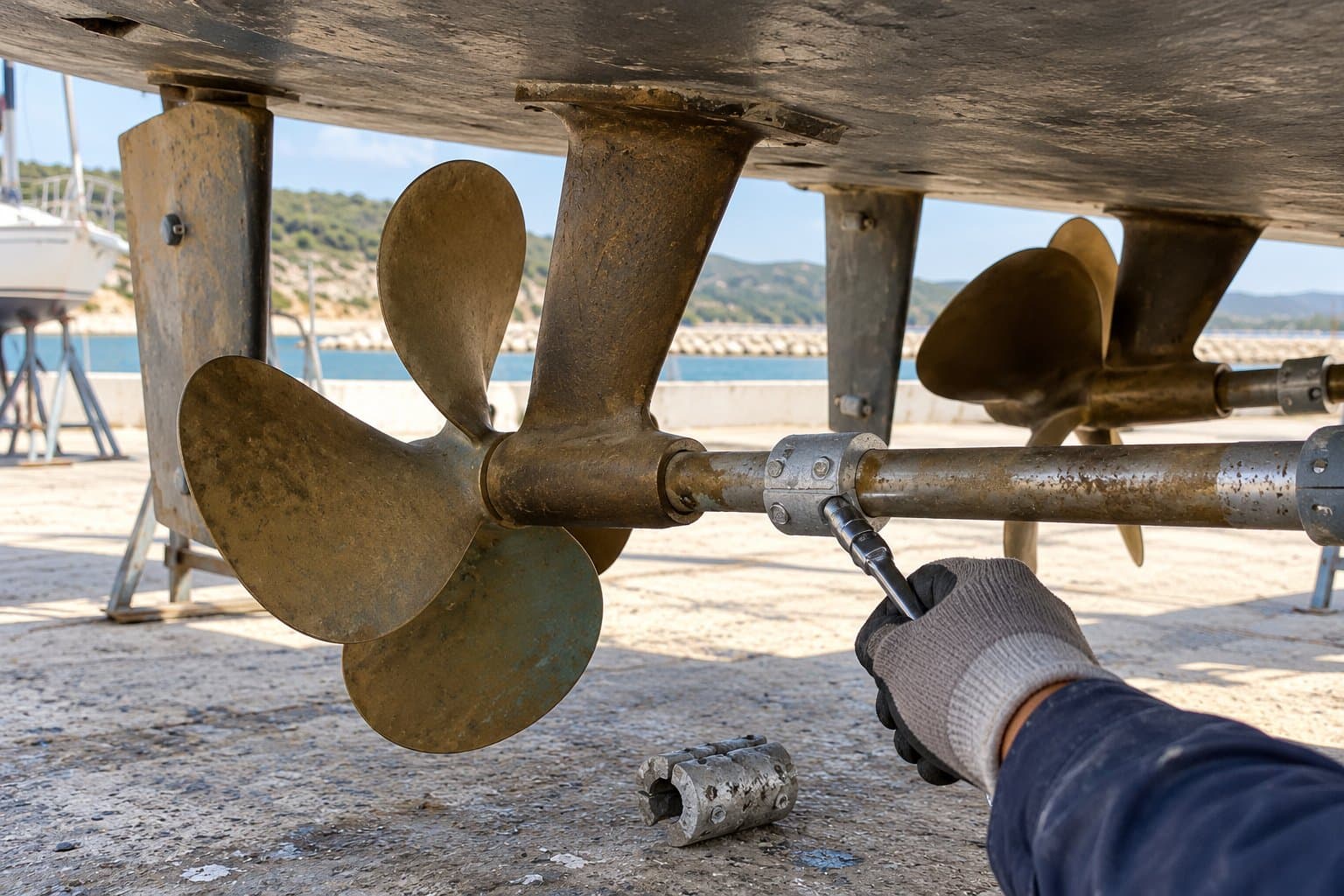
- On the propeller shaft: a collar.
- On the propeller: an anode fitted to the end of the hub.
- On the hull: a plate connected to the underwater metal fittings.
- On the drive legs: outboard, outdrive, saildrive.
- On the rudder or the bow thruster, depending on the boat.
- In the cooling circuit of some engines: pencil anodes.
When to replace them
The rule is simple: replace an anode once it is half worn. Beyond that, there is not enough metal left to last until the next haul-out.
- Check them at every haul-out, at least once a year.
- During the season, a look with a mask and snorkel lets you follow the wear.
- An anode that wears much faster than usual, or not at all, is a warning sign.
A bronze propeller turning pink, a pitted shaft, a drive leg covered in white powder: the protection is no longer enough. Check the anodes straight away.
Wearing too fast, or not at all
An anode that is almost intact after a season is not necessarily good news. The usual causes:
- it has been painted, and the antifouling cuts it off from the water;
- the electrical contact is poor: loose bolts, dirty metal underneath, a broken bonding wire;
- the metal does not suit the water: in fresh water, zinc gets covered with a layer that stops it working.
On the other hand, an anode that disappears within a few weeks may point to an electrical fault, on board or on the quay. In that case, have the installation checked by an electrician.
Zinc, aluminium or magnesium
The metal depends on the water the boat sails in.
- Zinc: seawater. The most common. In fresh water, it stops protecting.
- Aluminium (an alloy made for anodes): seawater and brackish water. It is lighter, and lasts longer than zinc for the same weight.
- Magnesium: fresh water only. At sea, it wears away very quickly and can damage paint and aluminium parts.
For a boat sailing in Tunisian waters, that means zinc or aluminium. For a drive leg or a saildrive, follow the engine manufacturer's recommendation. Avoid mixing metals on the same boat.
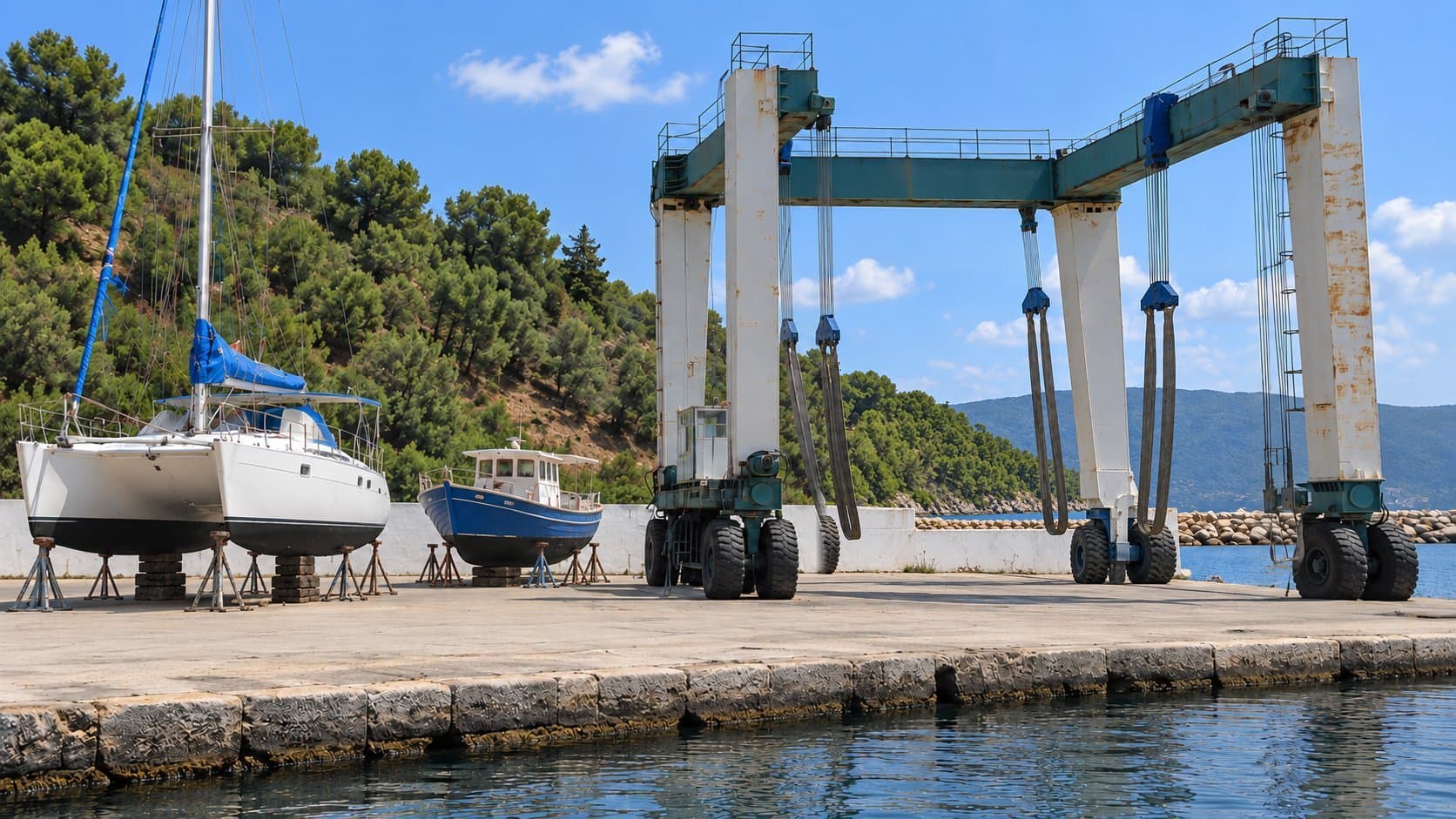
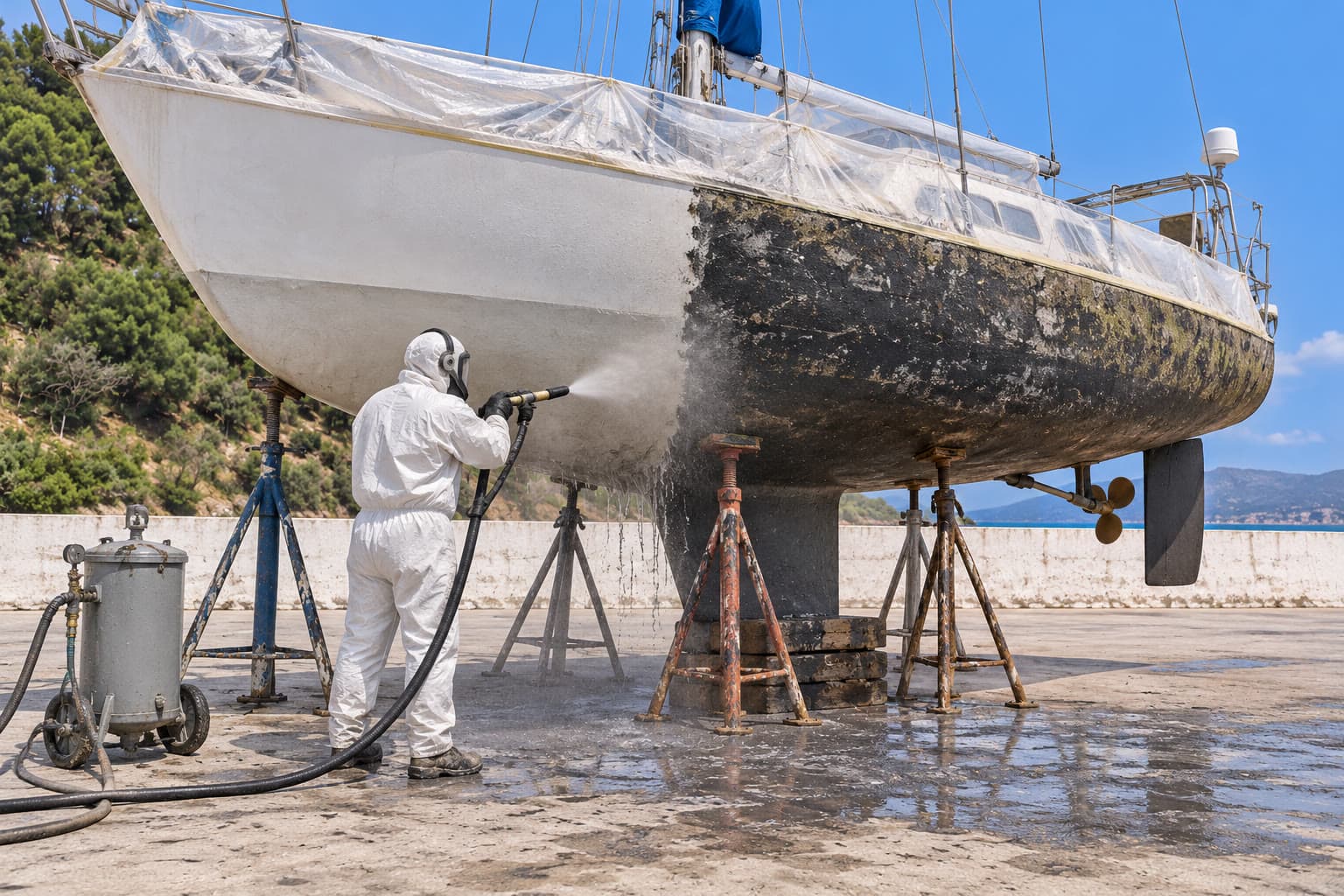
At the yard
At every haul-out, the shaft, propeller and hull anodes are checked. Once half worn, they are replaced. New ones are tightened onto clean, unpainted metal.