Eroding or hard antifouling: which one for the Mediterranean?
Both protect the underwater hull. They do not wear the same way, and they do not suit the same boats.
The YK Marine team4 min read
In brief
- Eroding antifouling wears away under way and renews itself: few coats build up.
- Hard antifouling stays in place: it copes with speed and scrubbing.
- The choice depends on the boat's speed and how it is used.
What antifouling does
Antifouling releases biocides, most often copper-based. They stop weed, barnacles and shellfish from settling on the hull. A fouled hull slows the boat down and burns more fuel.
In the Mediterranean, the water stays warm for much of the year and fouling grows fast. Boats are antifouled once a year.
Eroding antifouling
Also called self-polishing or ablative. The binder slowly dissolves as water flows over the hull. The surface wears away and exposes fresh biocide. The coat gets thinner over the season.
- It suits sailing yachts and motorboats at moderate speed that go out regularly.
- Few coats build up from one year to the next.
- Before repainting, a pressure wash and a light sanding are usually enough.
- On a fast boat, it wears away too quickly. Scrubbing it under water removes paint.
Hard antifouling
The coat does not wear away. The biocides leach out of a matrix that stays in place, and they work less well as the months go by.
- It suits fast boats, and boats that are often scrubbed afloat.
- Its hard surface copes with speed and friction.
- The spent matrix stays on the hull: it has to be sanded before repainting.
- Coats pile up over the years. One day, the hull has to be stripped.
The two side by side
| Hard | Eroding | |
|---|---|---|
| How it works | Biocides leach out, the coat stays | The coat wears away and renews |
| Boat speed | Fast or slow | Moderate |
| Scrubbing afloat | Copes well | Removes paint |
| Build-up over the years | Coats pile up | Little build-up |
| Before repainting | Sanding | Wash and light sanding |
There are also in-between products, sold as semi-eroding. They wear more slowly than an eroding antifouling.
Switching type
Going from one type to the other is not always straightforward. An eroding antifouling can usually go over a well-sanded hard one. A hard antifouling does not key well over an old eroding one: the old coats often have to be stripped first. Either way, check compatibility on the manufacturer's data sheet.
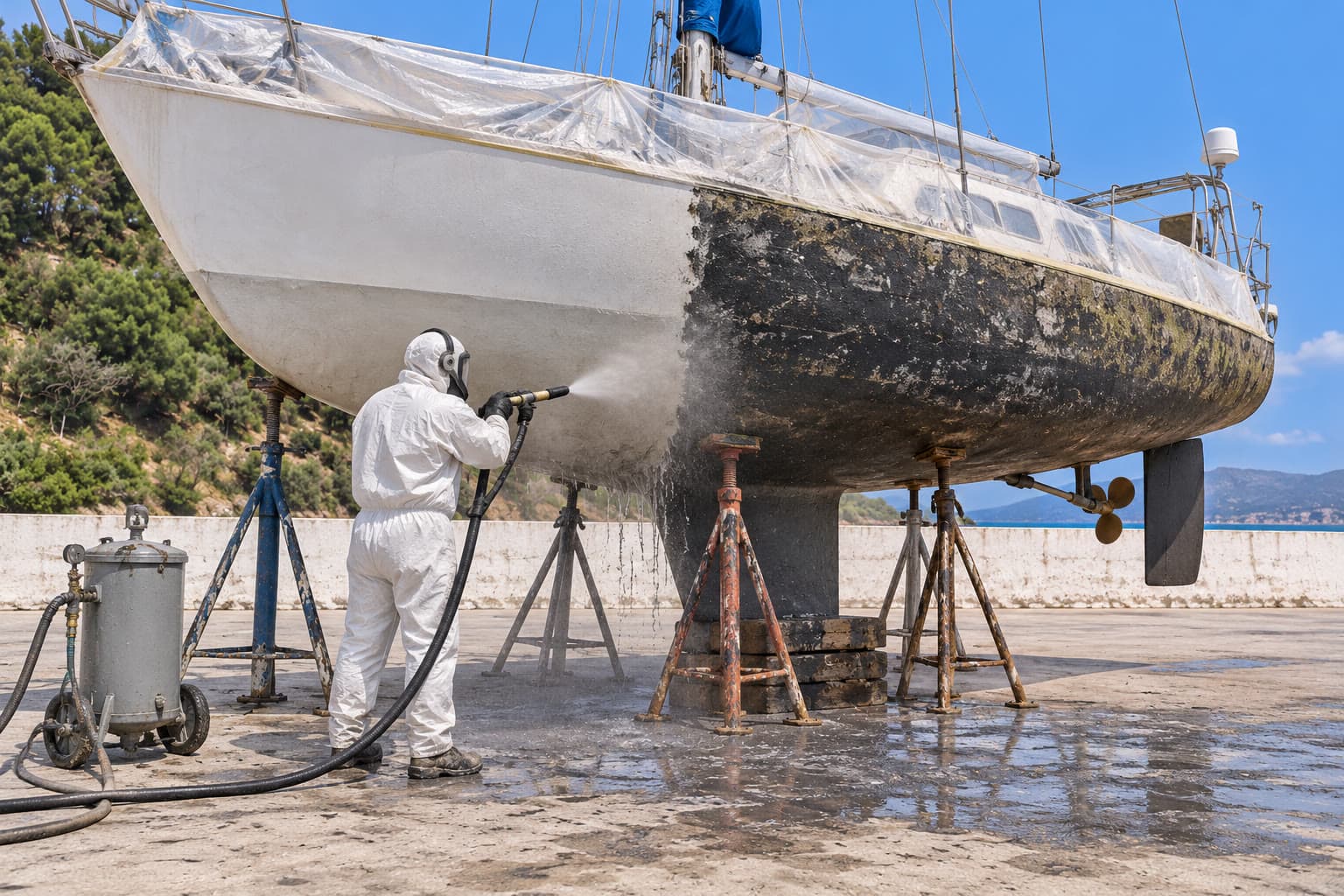
Too many coats, or antifouling that is flaking? Then it is time to go back to the gelcoat. We explain how in wet blasting or sanding.
Special cases
- Aluminium hull, outdrive or saildrive: never use copper-based antifouling, which makes aluminium corrode. Copper-free antifoulings exist for these cases.
- Anodes: never paint them. Painted anodes no longer protect anything. See when to replace your anodes.
- Time before relaunching: many products have a minimum, and sometimes a maximum, time between the last coat and launching. It is on the data sheet.
At the yard
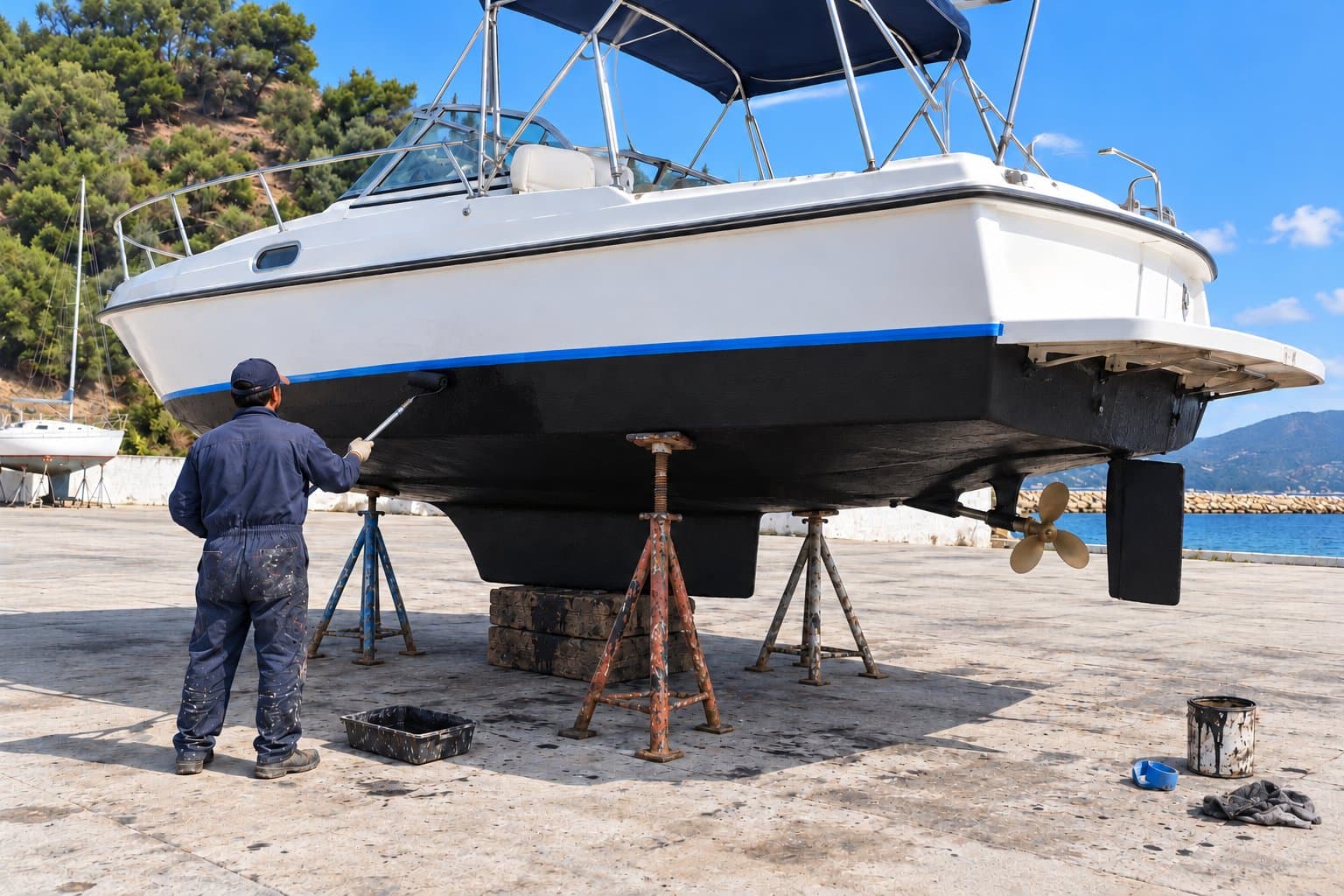
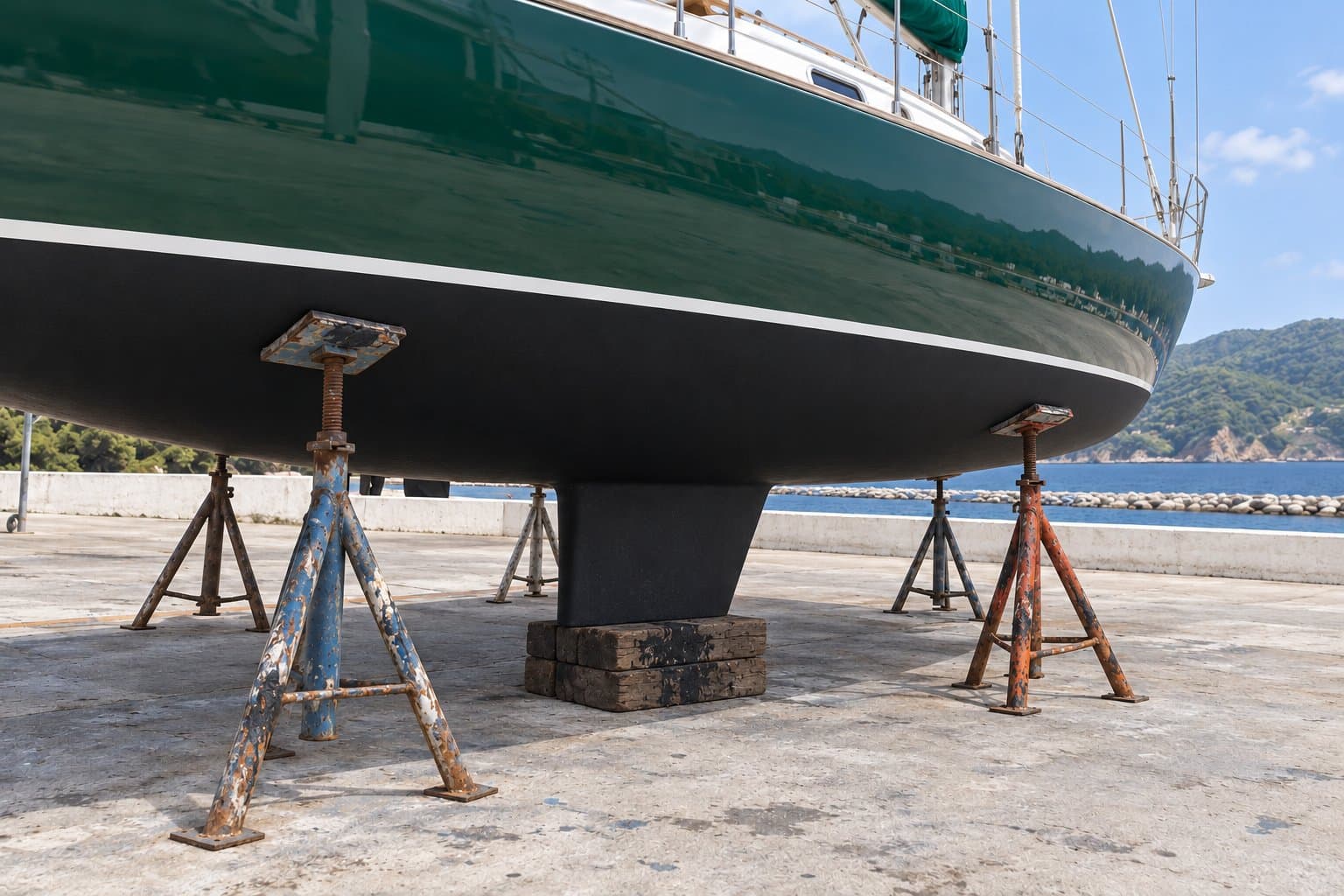
Antifouling is applied by roller, in two coats, after the underwater hull has been washed and sanded.